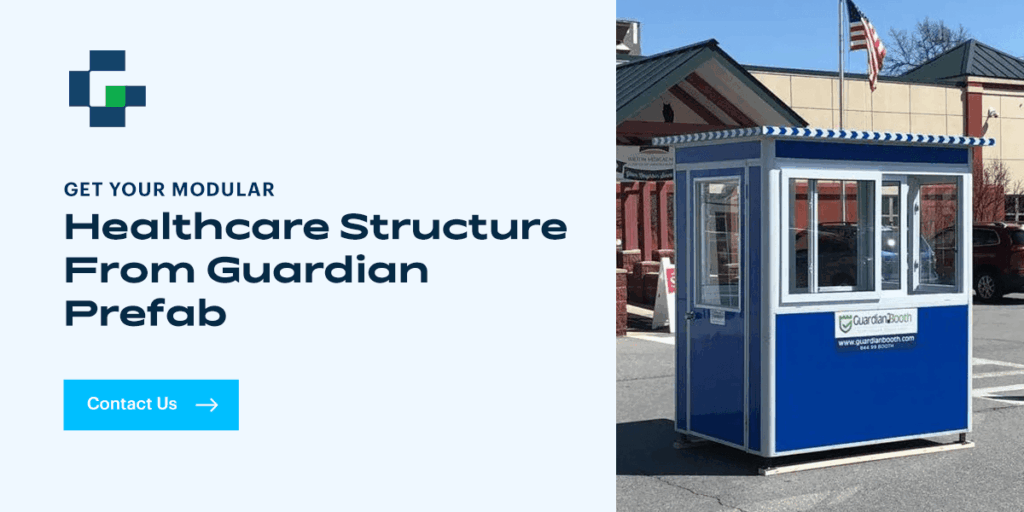

Managing a healthcare facility means solving problems in real time. Whether it's a security gap at the entrance, inadequate triage space, or infection control risks that standard layouts can't address, these operational liabilities demand immediate solutions.
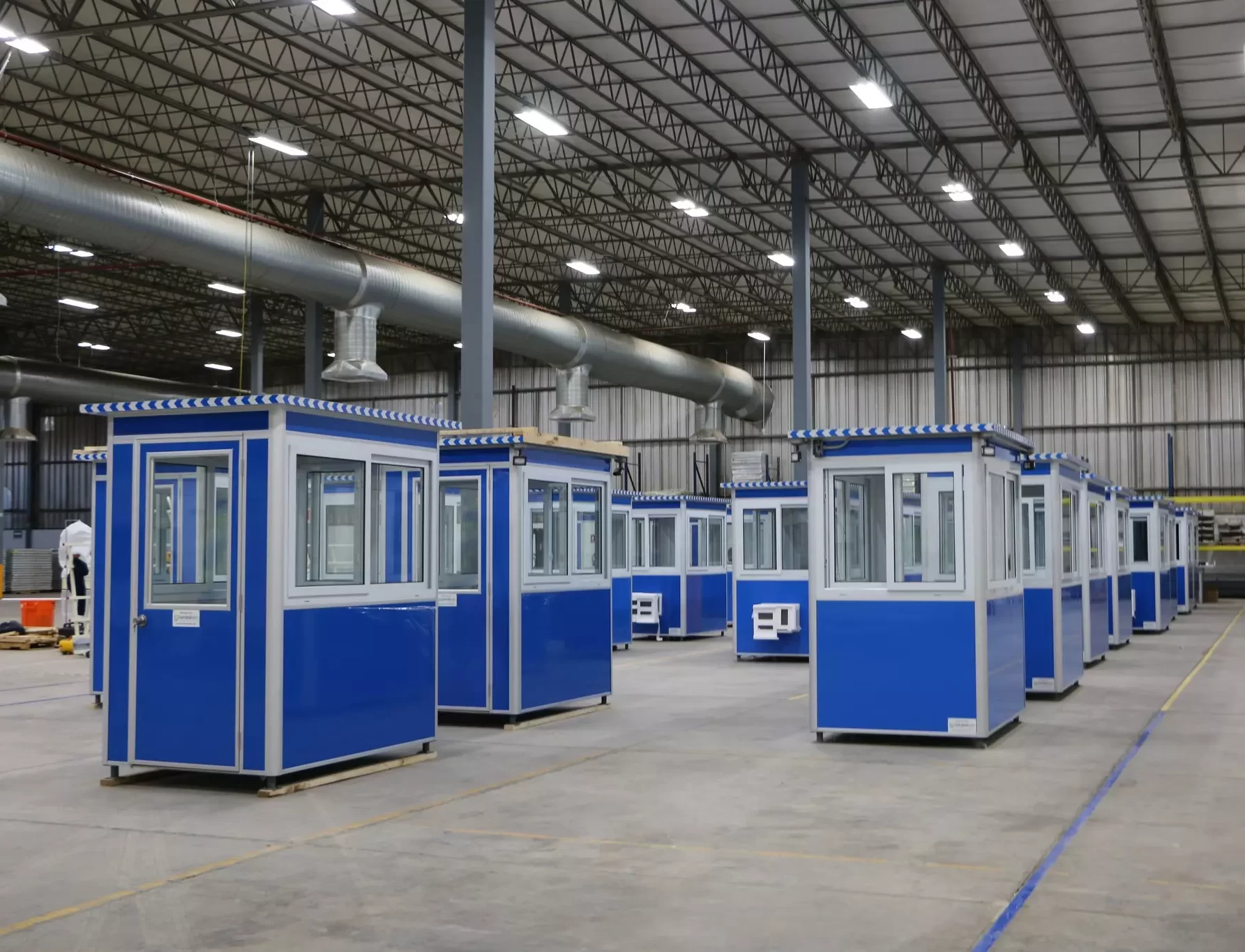
Traditional construction can help address these concerns, but renovation projects disrupt clinical operations, take months to complete, and often exceed budget. Modular structures offer a faster alternative. These prefabricated buildings arrive site-ready, install with minimal disruption, and can be configured into exactly what you need — from security booths to full medical clinics. Learn about four types of modular healthcare structures to determine which one fits your specific challenge.
A screening and testing booth is a dedicated, enclosed prefab structure at or near a facility entrance, used to assess patients before they enter the main building. These modular buildings for hospitals and clinics serve a specific infection-control function.
Hospitals, urgent care centers, and clinics managing infectious disease risk need solutions that separate symptomatic and non-symptomatic patients. The CDC recommends placing patients with known or suspected infections in a single-patient space if possible.
Healthcare professionals can direct symptomatic patients to these enclosed screening booths before they enter the main building. This creates the separation that CDC guidance stipulates without disrupting your existing floor plan or consuming exam room capacity.
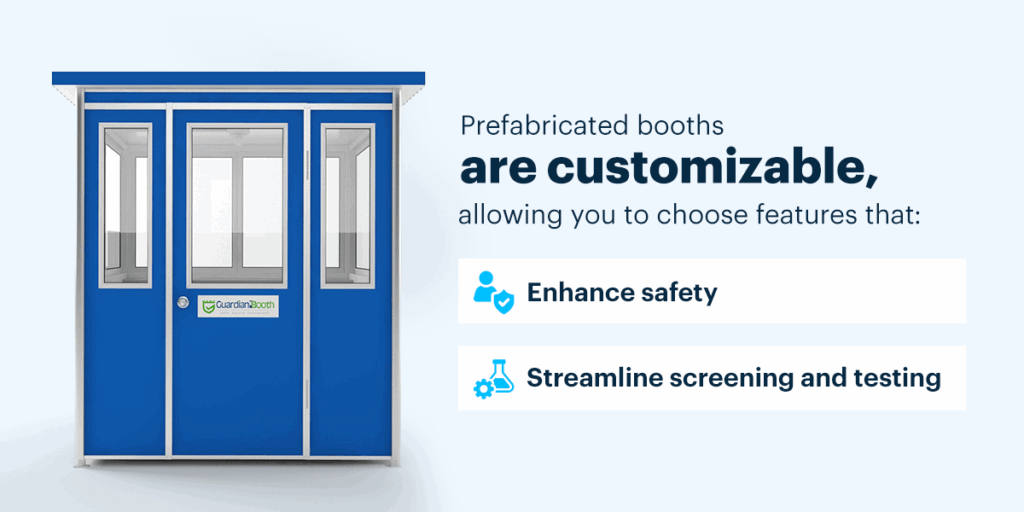
Prefabricated booths are customizable, allowing you to choose features that enhance safety and streamline screening and testing. Some options include:
An entry vestibule is a prefabricated enclosed structure that visitors and patients physically pass through on their way into the facility. Its function is to control, filter, and direct foot traffic. Staff inside check in visitors, confirm appointments, issue badges, or route patients to the right area.
Facilities with high foot traffic and open check-in areas face both management and compliance challenges. HIPAA requires reasonable physical safeguards wherever personal health information is routinely disclosed, including check-in areas. With high foot traffic and the disclosure of personal information at intake, you need a solution that channels foot traffic and enhances privacy.
Prefab vestibules create a defined transition zone that directs visitors and patients, enhancing efficiency while helping safeguard privacy. They provide staff with a controlled environment to manage credentials, screen visitors, and issue access permissions before individuals enter the main facility.
Features that improve vestibule functionality include:
Size flexibility matters here as well. A vestibule needs to be large enough to hold a visitor or two while staff checks credentials, preventing congestion at the entrance.
Modular medical clinics are the most expansive structure type in this lineup, providing a full enclosed clinical-grade space. These prefabricated facilities handle overflow for triage and patient consultations, especially when the main building reaches its capacity. They can also function as satellite vaccination programs, mobile clinics, and traveling nurse facilities.
Emergency department overcrowding is a documented and worsening crisis in healthcare. As such, the CMS requires applicable Medicare and Medicaid providers to maintain an emergency preparedness plan that includes surge-capacity measures.
A modular clinic is a ready-to-use clinical space that can help meet regulatory requirements while addressing real-world capacity constraints. Features to consider when evaluating modular clinics include:
Security and check-in booths are distinct from vestibules. While a vestibule manages flow, a security booth houses a security officer on duty. These modular healthcare structures are used for monitoring at the main entrance and controlling access to parking structures and emergency departments.
A security booth gives officers a protected, defined position from which to assess every person entering. When OSHA investigates a workplace violence incident and asks what controls the facility had in place, a security booth can be a tangible, documented measure that demonstrates your willingness to address safety issues.
Here are key features to consider for security booths:
Healthcare facility structure options have expanded significantly as modular construction has evolved. Three advantages of modular structures over traditional construction are:
Modular healthcare structures are versatile solutions that address challenges ranging from emergency department overcrowding to security concerns. Guardian Prefab has provided healthcare facilities with purpose-built solutions since 2014, including entrance gate booths, modular medical clinics, and security guard booths.
We serve hospitals, urgent care centers, doctors' offices, and other healthcare facilities across the United States. Structures arrive preassembled and ready to use, minimizing disruption to your operations.
Explore our healthcare solutions to see how modular options can solve your facility's challenges. Alternatively, contact us to discuss your specific needs, and we'll help you find the best modular structures for your healthcare facility.