Government facility managers and operations supervisors need to secure entry points, control access, and support field operations, often within a strict fiscal-year budget. Most modular structure providers respond with large-scale building solutions that outpace what these projects actually require in scale, timeline, and cost.
The best modular structure for your facility depends on the specific use case at hand. This breakdown organizes options by need, from entry control and screening to field offices and rapid deployment, so you can match the right structure to the job.
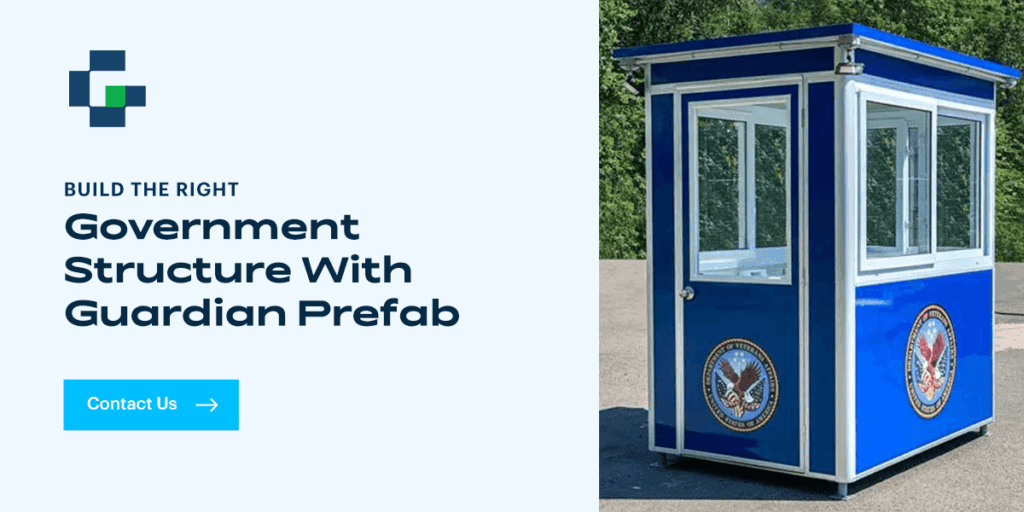
Government facilities that need to control who enters a property rely on prefabricated security booths as the go-to modular structure. These factory-built units arrive fully assembled, which means no on-site construction, and booth personnel can staff them as soon as they arrive.
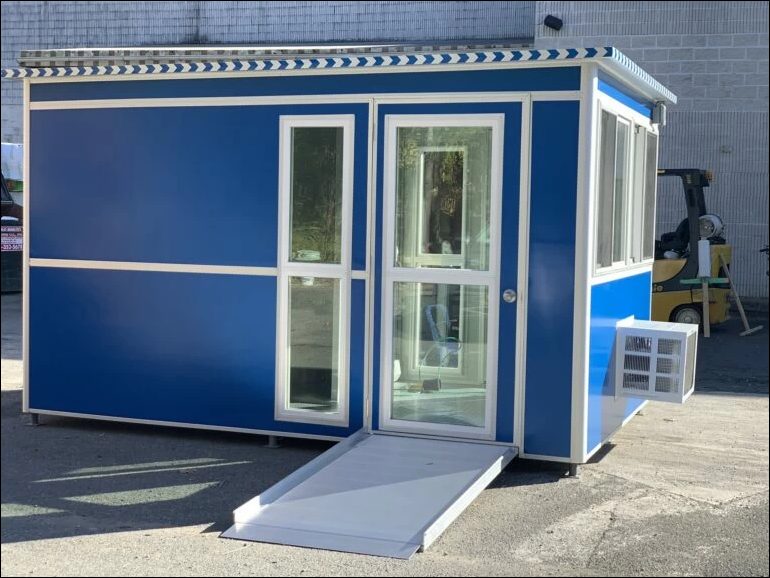
Durability and compliance drive the appeal for government use specifically. A booth built for this setting needs to withstand constant weather exposure, vehicle traffic, and long shifts for personnel at the entry point, while meeting accessibility standards that many commercial buyers often aren't required to consider. Federal facilities in particular must comply with the Architectural Barriers Act (ABA) of 1968, which requires that structures designed, built, altered, or leased with federal funds remain physically accessible.
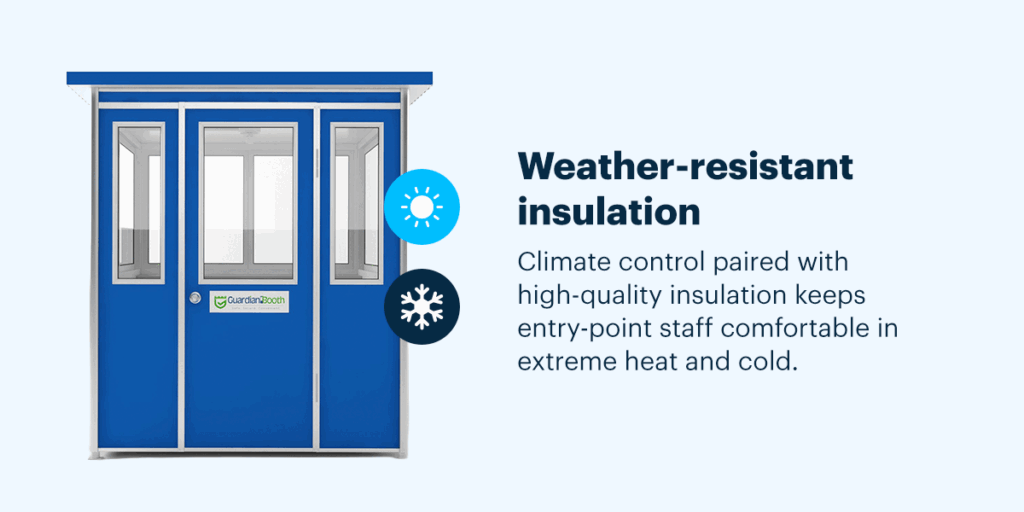
The right booth configuration accounts for both security and comfort at the entry point:
For facilities managing multiple access points, an entrance gate booth configuration adds a transaction window and extended sightlines suited to vehicle checkpoints. Either option provides a government facility with a defensible, code-compliant entry point without the months-long timeline of a permanent structure.
Vehicle inspection, cargo checks, and personnel screening all need a dedicated weatherproof workspace positioned exactly where the work happens. A portable inspection station accommodates this without a permanent build, since the structure can move if a checkpoint location shifts or a mission scales up.
Built around controlled sightlines and transaction windows, the design gives personnel a clear view of vehicles and pedestrians while maintaining a secure barrier. Interiors leave room for the required scanning and communication equipment screening operations, while built-in electrical and data hookups spare agencies from running temporary power to a jobsite.
When a standard layout doesn't fit the mission, custom configurations handle specialized screening requirements. Some agencies pair these stations with canine screening bays or extra lanes at high-traffic checkpoints, built into the original spec rather than added later.
Public sector agencies at the federal, state, and local levels use government and military security structures at access points for government buildings, secure facilities, and other controlled-entry environments. These structures help agencies maintain visibility, control access, and support screening workflows without committing to a permanent build.
Management staff working on-site at a government facility, an active project, or a remote area need a functional workspace, and waiting months for permanent construction rarely fits the project timeline. A mobile prefab site office fills that gap quickly, arriving ready for staff to move in rather than requiring a build-out first.
Government agencies deploy these offices during active construction or infrastructure projects, remote field operations, temporary headquarters during facility renovations, and staging areas that need a professional on-site presence. Mobility remains the core advantage. Many units ship with locking wheels, allowing the structure to be relocated within a facility as operations shift.
A well-equipped mobile office includes:
Standard models can get an office up and running fast, while larger custom builds take longer to accommodate specialized layouts. Facilities that need a larger or more complex field office setup can look at custom prefab structures built to spec. The setup itself is measured in hours rather than weeks, and portable units often involve less permitting than permanent construction, though requirements vary by jurisdiction.
When a government agency needs to quickly stand up operational support after a disaster, a rapid-deploy trailer booth is the practical answer. These structures need no foundation and reach operational readiness within hours of arrival, then relocate again once the response effort winds down.
The Federal Emergency Management Agency (FEMA) already leans on this model. During the Maui wildfire response, the first 15 modular structures reached operational status within two weeks, with 169 in place within 60 days. That timeline aligns with a broader pattern — modular buildings can be completed 30% to 50% sooner than traditional construction, according to the General Services Administration.
Cost matters just as much as speed for local governments managing recovery budgets. FEMA's Public Assistance program, under Category B for emergency protective measures, reimburses local governments for reasonable temporary facility costs needed to continue essential community services after a disaster, and modular office trailers qualify as an eligible cost. Since the agency generally covers the least costly eligible option, a prefab portable structure often comes out ahead in that comparison.
This kind of rapid, ready-to-use deployment gives agencies facing an urgent timeline a functional space without waiting on a construction schedule.
Guardian Prefab manufactures purpose-built modular structures for government facilities that need a faster path from budget approval to operational readiness. Bulletproof glass, ABA-compliant ramps, weather-resistant construction, and custom sizing are all available on request, so agencies get a structure built for the job rather than a generic shell.
Standard Quick Ship models are available in as little as two weeks, and custom configurations typically run four to six weeks, depending on scope. Explore government and military prefab structures or contact us to discuss your project.