A growing team needs a sufficient place to work, but a traditional office lease locks founders into high rent and multiyear terms before the business proves its model. Constructing a new office solves the space problem too slowly, often taking months just to break ground. Portable office structures can close that gap.
Small office trailers, container offices, and prefabricated modular offices each carry a different price tag and suit a different team size. When determining which type of portable office is best for a startup, the answer depends on your budget, team size, and time frame.
These three formats serve as the baseline for most portable workspace decisions, with each option offering a different balance of upfront cost, durability, customization, and long-term value.
A small office trailer is typically the most affordable in terms of purchase price, and it earns that position through simple construction. Builders mount the unit on a wheeled chassis, so a standard truck can tow it from one site to the next without a crane or flatbed. Step inside, and the layout looks like a conventional office, with finished walls, flooring, and lighting already installed. Used office trailers for sale bring the entry price down even further, since previous owners have often already absorbed the steepest depreciation.
The trade-off shows up over time. Lighter construction means less durability and weaker security than steel alternatives, especially in harsh weather or high-traffic sites. This format fits best for frequent relocation, short-term projects, or teams of one to three people who need a functional space fast.
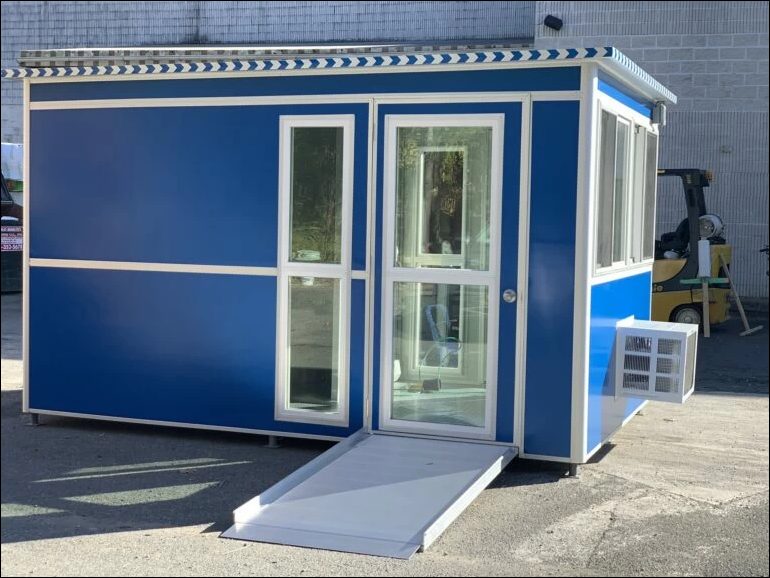
Prefabricated modular offices hit a sweet spot for startups that want real customization without a construction timeline or a long-term lease. You can add HVAC and power, build in data ports, and design a layout around your team, then own the structure outright once it arrives. Compact configurations work well for very small teams who need little more than a desk and a phone line, with a door that locks for privacy.
These builds also cut costs measurably compared to traditional construction, since factory production avoids the labor and weather delays that drive up costs in a conventional build. A small modular office in a 4×6 or 6×6 configuration is often the most startup-friendly option, and the unit remains relocatable and scalable as your team grows.
When shopping for a modular office for sale, look for a prefabricated modular office that can be configured with electrical and climate control features. You may also see compact units marketed as an office shed for sale. Prefab modular booths share that basic concept but typically feature heavier-duty metal framing, full electrical packages, and climate control options that a shed cannot match.
If you're browsing a container office for sale, expect to pay more up front than a comparable trailer. That higher price buys steel construction, which withstands severe weather and forced entry far better than a lighter trailer frame and holds up through years of daily use. Builders typically repurpose a shipping container or fabricate one from heavy-gauge steel panels, then add insulation and wiring before finishing the interior walls.
Placement takes more planning than a trailer delivery. Many container offices arrive by flatbed and may need a crane or industrial forklift for final positioning, while some deliveries can use a tilt-bed truck when site conditions allow. Site access, ground conditions, and unloading requirements all matter before you order one.
Construction crews rely on a portable office daily. Colleges and universities need the same flexibility, and event management companies turn to them for short-term setups.
Price varies widely within every format, even among units of the same general size. The following factors explain where that range comes from, so every quote you receive makes sense:
For a quick breakdown of size recommendations and what to expect on pricing, the portable office FAQ is a useful reference.
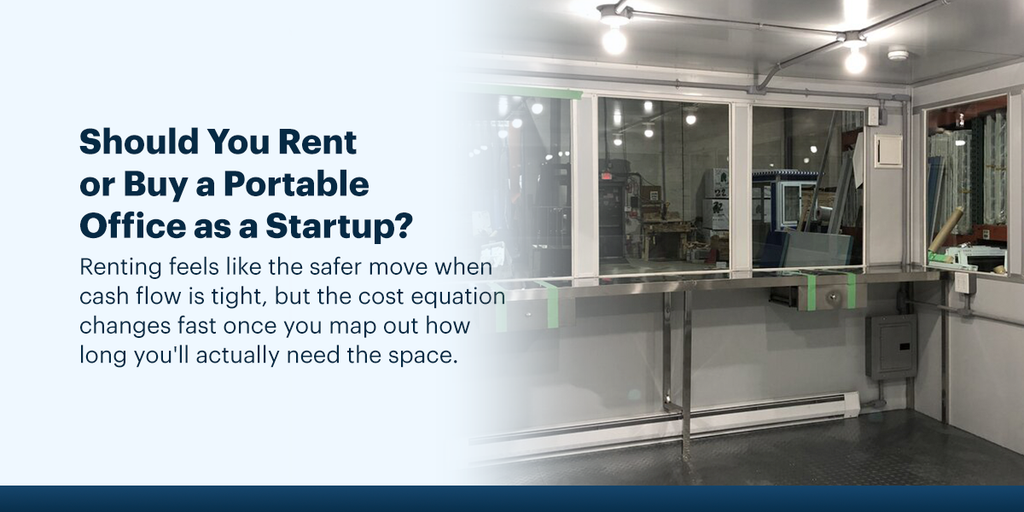
Renting feels like the safer move when cash flow is tight, but the cost equation changes fast once you map out how long you'll actually need the space.
An office trailer for lease makes the most sense when your location is still uncertain, your timeline runs under a year, or you simply want to preserve capital during an early growth stage.
Buying wins once you pass that breakeven point. A startup with a fixed site and a multiyear outlook often spends less overall by purchasing outright, especially compared with a traditional office lease that locks in rent increases and long-term commitments. When calculating office trailer rental cost, factor in delivery and setup costs, plus any monthly add-on fees that vendors tack onto the base rate.
A purchased unit skips those recurring charges entirely. It also holds resale value, so a structure you outgrow can be resold, relocated to a new site, or repurposed for another part of the business. Owning a prefab unit means owning an asset, not a sunk cost. This breakdown of buying vs. renting a portable office can help you compare each path against your own timeline.
The right size depends on headcount and how the space actually gets used, and starting smaller is almost always the smarter financial call for a growing startup.
Guardian Booth recommends a 4×6 booth for one person, a 6×6 booth as the minimum size for two people, and a 6×8 or larger booth for three or more people. Larger configurations, including 8×10 booths and custom modular setups, may be better suited for teams that need multiple workstations, meeting space, or added storage.
Most startups do best by choosing the smallest configuration that meets today's needs. Modular and prefab units can be upgraded, connected, or supplemented later, so your space can grow alongside your team.
Guardian Booth turns that clarity into action. We build factory-made portable office structures that range from a single compact booth to a full multi-desk configuration, and every unit ships at direct-to-consumer pricing with no middleman markup. Standard sizes also come with free nationwide shipping, so the quote stays simple from the start.
You now understand the cost drivers. You now know how to size a space for your team. The next step is seeing those numbers applied to your specific setup. Contact Guardian Booth to request a free quote, or call 844-721-5205 for a clear answer on the format and size that best fits your operation.