
Modular homes are a precise, efficient and flexible approach to homebuilding, offering advantages traditional construction often can’t match. High-quality, affordable modular options are gaining traction as more buyers explore alternatives to site-built homes.
This guide can help you decide if a modular home is ideal for your lifestyle and budget.
Today’s homebuyers have more choices than ever, and each option offers distinct advantages depending on your goals, budget and timeline.
Understanding how these home types differ in build method, financing, durability and sustainability can help you confidently choose what makes the most sense for your lifestyle.
Built in sections within a climate-controlled factory, modular homes travel to a final site for assembly on a permanent foundation. They meet the same building codes as traditional homes and benefit from faster construction timelines, consistent quality control and durability. Financing is straightforward, and their efficient design can reduce carbon emissions by up to 45%.
Constructed entirely in a factory and delivered on a metal chassis, manufactured homes follow federal HUD standards, which may be less stringent than local codes. While they’re quick to install and more affordable upfront, they may face limitations in financing, customization and long-term durability. Energy performance and material quality can vary.
Built from the ground up at the final location, on-site homes follow all local and state codes. The process can be up to 50% slower than modular builds and more exposed to the elements, which can affect quality. However, when built well, they offer lasting durability and full access to traditional financing. Sustainability depends heavily on builder practices.
Manufactured homes are generally the least expensive upfront, costing less than a modular home and nearly half as much as an on-site built home. However, they depreciate over time, cannot have multistory layouts, and must remain fixed to a steel chassis.
Determining what a manufactured home is worth depends on several variables — age, condition, location, size and amenities. Whether you plan to sell, refinance or want to confirm your home’s market value, scheduling a professional appraisal is the best way to get an accurate estimate.
Modular homes cost more per square foot than manufactured homes, but typically up to 20% less than traditional on-site builds. They offer more design flexibility, multistory options and follow the same local and state codes as site-built homes, making them a wise long-term investment with better appreciation potential.
On-site built homes are usually the most expensive option due to higher labor and material costs and longer construction timelines. On the plus side, they offer the highest level of customization and design freedom, and tend to retain or increase their value over time.
Modular and manufactured homes benefit from efficient, factory-based construction, which reduces weather delays, speeds the building process and minimizes waste — letting you move in sooner and save on costs compared to traditional on-site builds.
The modular home construction process is virtually synonymous with efficiency, precision and peace of mind. Building in a factory environment allows for streamlined workflows and rigorous quality control at every stage.
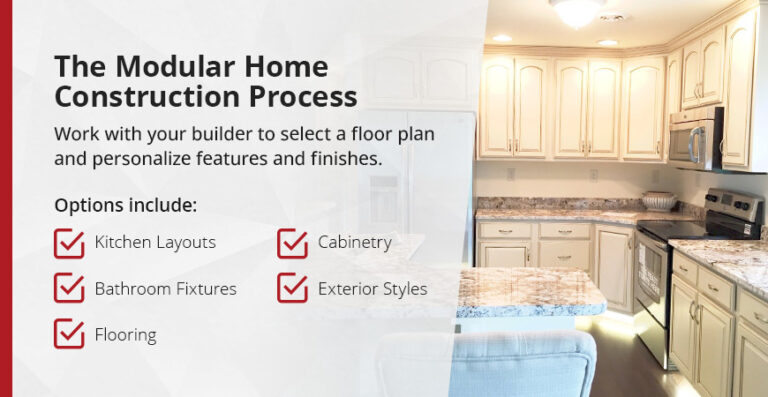
Fabricators use advanced equipment and skilled labor to construct every module indoors, protected from weather and site delays. Each module undergoes strict quality inspections and meets or exceeds local building codes. This process results in consistent craftsmanship and reduced material waste.
While one team builds your home in the factory, another simultaneously prepares your homesite, including excavating and pouring the foundation and preparing everything for delivery and assembly.
Crews carefully transport the completed modules to your property. A crane operator sets each module onto the prepared foundation, where builders securely join them.
On-site crews put the final touches on the project, sealing the roof, completing the exterior siding and fascias, painting walls and ceilings and installing flooring. The result is a seamless, move-in-ready home.
Since homebuying is such a significant investment, you want to feel confident in your choice. Where you live should reflect your lifestyle, needs, and preferences, making you feel proud and content when you walk through the door.
A few practical factors can affect your building experience.
Modular homes are an excellent fit for a wide range of buyers, particularly those with specific goals or unique circumstances. The following groups tend to benefit most from choosing modular construction:
Modular homes are an efficient alternative to traditional construction, combining quality craftsmanship with design flexibility and faster build times. With nearly 60 years of experience, Guardian Homes specializes in custom modular homes built to match your budget, timeline and specifications.
Reach out to schedule your personalized consultation and learn how modular construction can work for you.