

It should come as no surprise that interest in shul security is spiking. After all, it’s been a deadly year for shuls around the country. The list of antisemitism shootings at synagogues in the last year is horrifying:
Not to mention the 13 anti-Semitic incidents that took place in the last weeks of 2019 as Jews were being attacked on the streets of New York. Unfortunately, the attacks on synagogues are a piece of a larger picture.
The numbers are grim, indeed.
According to Anti Defamation League (ADL) statistics, anti-Semitic incidents in the U.S. increased by 55% in the last ten years.

And while the numbers went down slightly from 2017, a closer look by the ADL reveals that the incidents were increasingly violent:
The final numbers aren’t in yet for 2019, but given the above incidents, the ADL expects a significant increase over 2018.
And in NYC alone, hate crimes increased by 51% this year.
The FBI reports that hate crimes in ALL houses of worship - churches, synagogues, temples, and mosques - increased 34.8% from 2014 to 2018.
Jewish protection organizations were happy to hear that Attorney General William Barr pledged to prosecute anti-Semitic crimes under Federal law, but people are still jumpy. No wonder shul security is becoming a top priority.
While we would all like to feel safe in shul, as it is now, many shuls are soft targets, meaning vulnerable to attack.
And it’s not easy to “harden” our shuls.
Why?

Despite the challenges, it IS possible to secure a shul. In many cases, with some creativity shuls can even find low-cost solutions to some of their security issues. There are also federal and private grants available.
It does take time, a firm commitment from the shul leadership, and buy-in from the shul membership.
The first step is to create a security plan.
Here are the basics:
There are free tools (like the one below) available online for a synagogue security assessment. These forms enable you to assess all aspects of your security risks.

Your local police department can help you, too.
You’ll identify and rate:
The external risk factors that make the shul vulnerable such as:
The physical features that can protect the shul such as:
With that information, you can begin to create a security plan.
Perimeter security refers to the safety measures that are in place to keep away intruders or attackers.
This topic is so important that we’ll come back to it later in depth.
But for now, start with the easy fixes. Broken fence? Weak locks? Bad lighting? Take care of those problems right away. Install an alarm or video monitoring equipment.
Those issues are relatively inexpensive. Even video equipment today can run from your existing computers and start at around $100.
Who will respond in an emergency? What will their roles be?
Your shul may have members with a background in military, security, or law enforcement. Enlist their help.
Some shuls are actively offering members synagogue security training. Similar to air marshals, they’re creating a grassroots team to protect the shul in case of an attack.
You may want to hire a synagogue security consultant to advise you. And you can read more about guidelines for synagogue security in this “Houses of Worship Security Practices Guide.”
Let’s get back to perimeter security. While an emergency plan is necessary, in the best-case scenario, it never gets implemented.
Perimeter security is proactive, while emergency plans are reactive.
Unfortunately, even with a highly trained team, once an attack starts, it's often impossible to altogether avert a tragedy.
Case Study: On December 29, 2019, an attacker opened fire in a Texas church. A trained member killed the attacker with a single shot. However, in the 6 seconds it took to respond, the intruder shot and killed two people. A guard at the door could have identified the threat and avoided the attack completely.

The main purpose of perimeter security is to DETER an attack. If an attacker comes anyway, perimeter security will DETECT the threat and DELAY or neutralize it.
Shuls committed to a thorough perimeter security plan may want to research the CPTED approach. CPTED (pronounced “sep-ted”) is a systematic plan for perimeter security that controls the physical environment in a way that deters and reduces crime.
Perimeter shul security includes every aspect of securing the shul:
This involves the basics such as locks, fences, and walls.
Yes, this means CCTV monitoring equipment, but it goes way beyond that. Anyone approaching the shul should feel that they are being watched.
All areas should be well illuminated, avoiding large, shadowy sections. Trim shrubs or other obstacles to keep a clear line of sight around the property. The front entrance to the shul should be in clear view of the street.
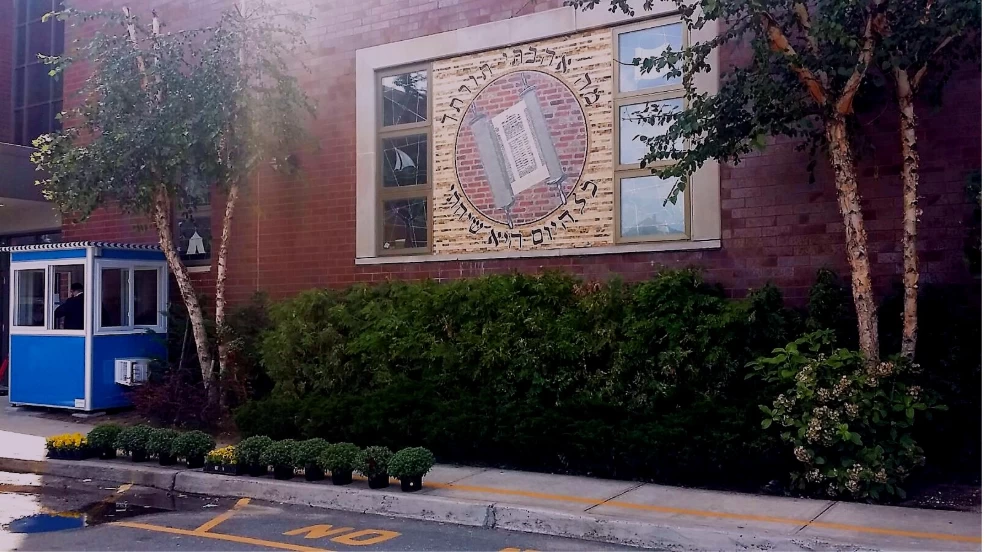
Guard booths or security shacks offer excellent surveillance opportunities. These security shacks can be positioned close to the building, serving as a checkpoint. Or, on a large campus, a booth or security shack can be farther away to survey a greater area. Booths can also be equipped with electric lights, brightening the edges of the property.

This is often a tough one to implement in a busy shul, but it’s crucial to security that the shul control who goes where on its property.
Locks are only effective if they’re used. Best practice is to have only ONE entrance open. All other doors should be used exclusively as exits that are locked from the outside.
Who has keys to your locks? If you don’t know, then it may be time to change the locks. Locks with codes should have the codes changed periodically.
No matter how well protected a shul is, emergencies can happen. Having people on site, watching for suspicious activity is the only way to keep a shul safe.
Grassroots efforts from shul members are a huge part of it, but nothing can replace armed security at synagogues.
According to The Freedonia Group, U.S. guarding revenues are expected to grow 2.6% per year through 2023, reaching $33 billion
Having a guard is a deterrent in and of itself. Just the sight of a police vehicle or guard booth may turn away a potential attacker.
In fact, some institutions order guard booths with tinted windows to create the illusion of additional guard presence. So, for example, a shul might hire only one armed security guard, but station an extra guard booth in another place on the property.
Case Study:
Don’t underestimate the power of a deterrent. Some experts believe that Adam Lanza, the Sandy Hook Elementary School shooter, originally intended to target Newtown High School. Investigators saw Lanza’s car on the Newton HS surveillance footage, circling the school parking lot. They suspect that Lanza saw two police cars in front of the school and decided to change his target. - “Soft Target Hardening”
Ideally, the same synagogue security guard comes to the shul regularly. He’ll get to know the shul members, recognize faces, and be able to spot someone who’s out of place.
He’ll also build relationships with shul goers so they’ll come to him immediately with concerns. “You need people to be your eyes and ears,” says Officer Jason Gagnon, DeKalb County Police Detective, and shul security coordinator.
Hiring the right guard is essential. There are two options for a synagogue security guard:
Shuls may be tempted to hire security guards because they charge half or a third of a police officer’s fee. But Officer Gagnon warns that you get what you pay for.
Once you hire a guard, make sure he has the tools and resources to do his job. Booths are an excellent way to ensure the safety and comfort of a guard.
Based on the needs of the shul, booths can be equipped with:
Dr. Abraham Taub, CEO of Guardian Booth, adds, "Most people think about locks, bars, alarms, and uniformed guards when they think about security. While these countermeasures are by no means the only precautions that need to be considered, they are the logical place to begin. Physical security is a vital part of any security plan and is fundamental to all security efforts. I am proud that our booths have been used by many local synagogues, religious schools, and security firms as a part of their overall security plans."
Are you interested in learning how Guardian Booth can be a part of your shul security plan?
Contact us to find out more.

